Showing posts with label art nouveau. Show all posts

Monday, June 6, 2011

Maginel

Maginel Wright Enright Barney was born Margaret Ellen Wright, but her mother created "Maginel" as a conjunction of Maggie Nell.  And maybe "Maggie-Nell" is how they pronounced Maginel, although I prefer to pronounce it more like the word magic, as in "MAJ-inel." 


What a gene pool.  Her older brother was Frank Lloyd Wright, and we all know what he did for a good share of his life.  (Built lots of buildings, chased lots of women.)  Frank was 14 years older than Maginel, and a lifelong collector of Japanese prints.  It would seem that looking at her older brother's collection certainly had an influence on her work. 
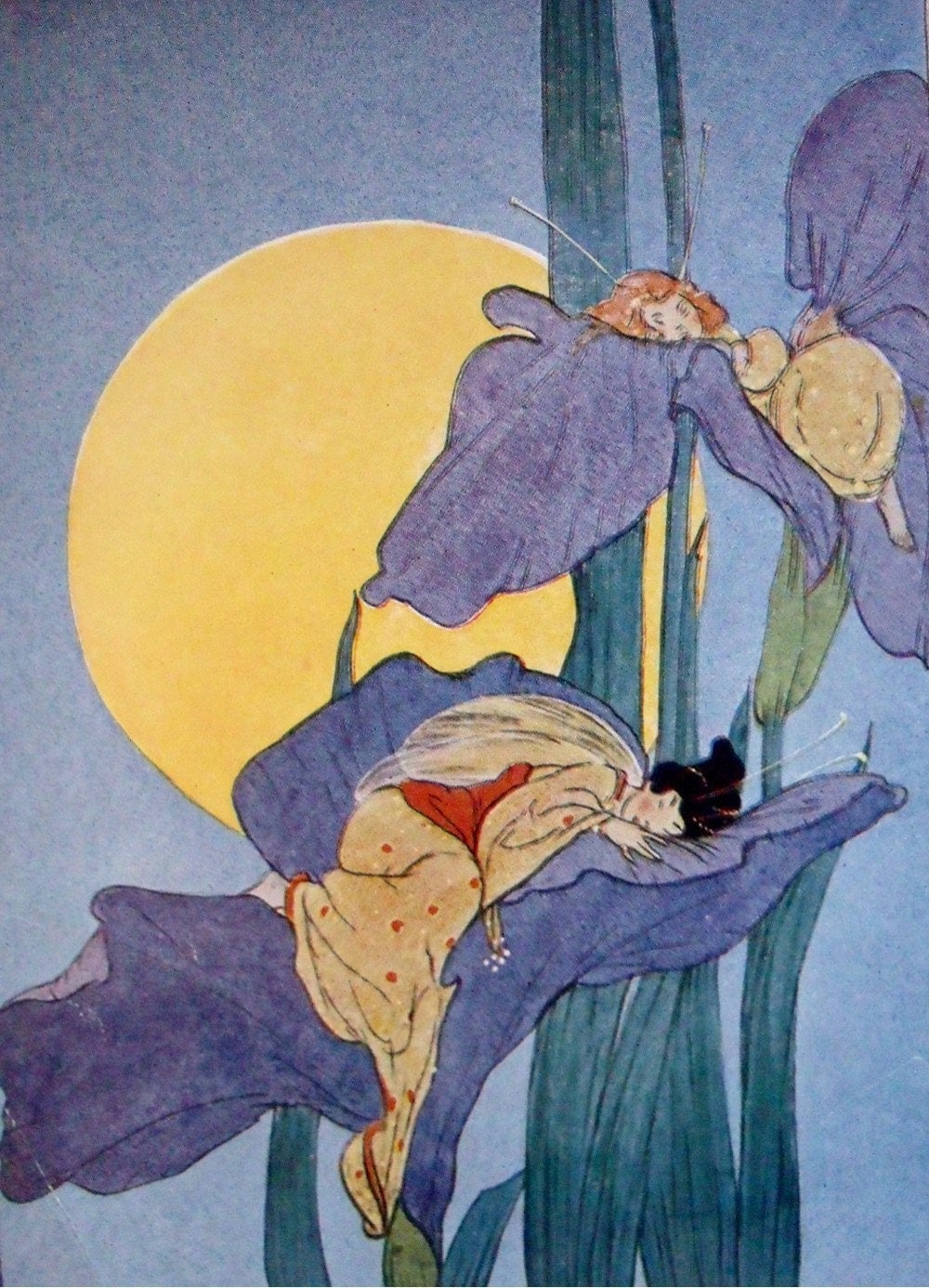

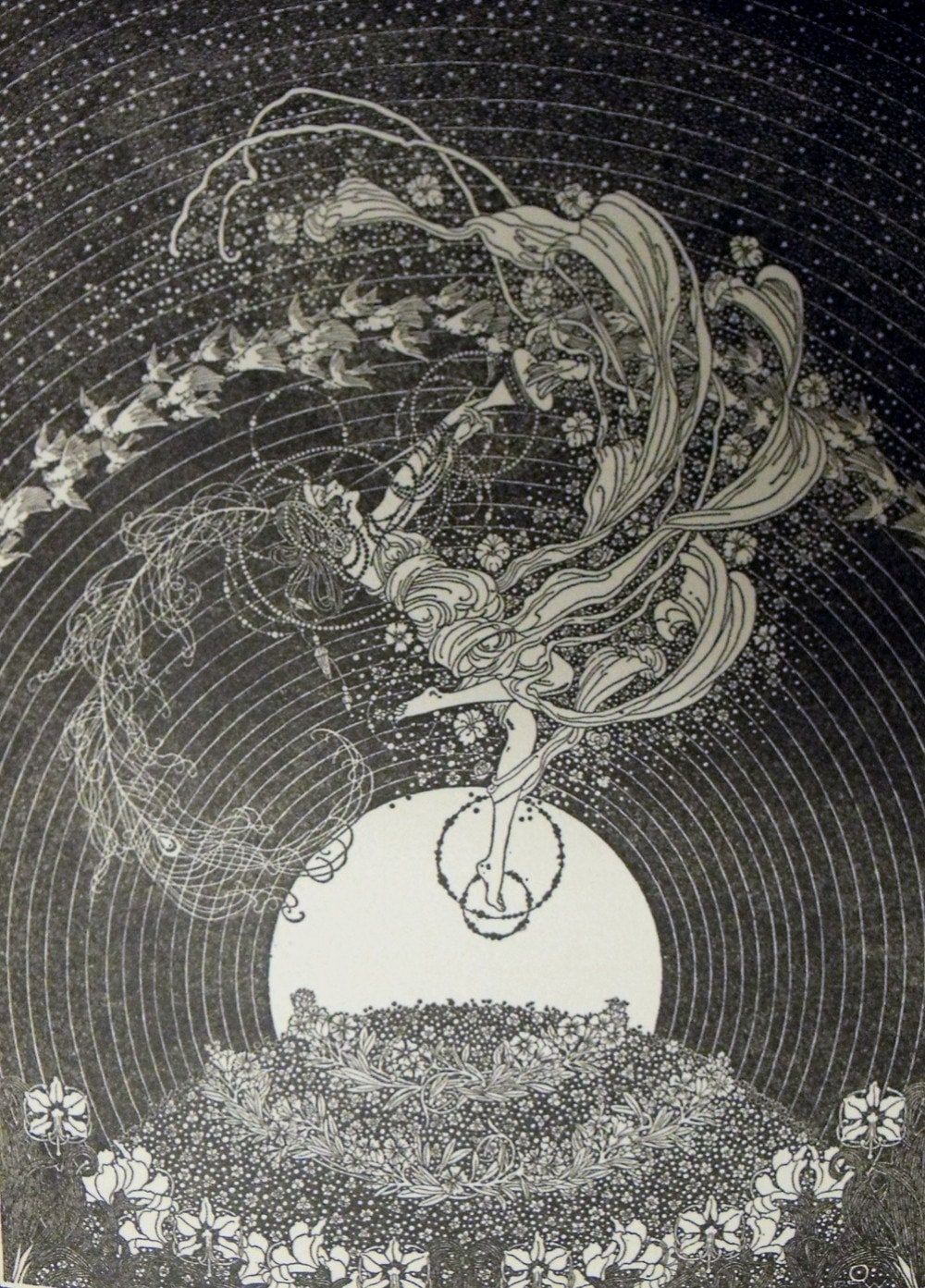
From "Flower Fairies, c. 1915


 Maginel's rendering of plants and flowers has always been, to me, more interesting, nuanced and technically superb than her illustration of human beings.  However, since she was often illustrating fairies and children for children's books, the work was going to be simpler and stylized. 

I've also been intrigued by her use of large color fields in illustrations:
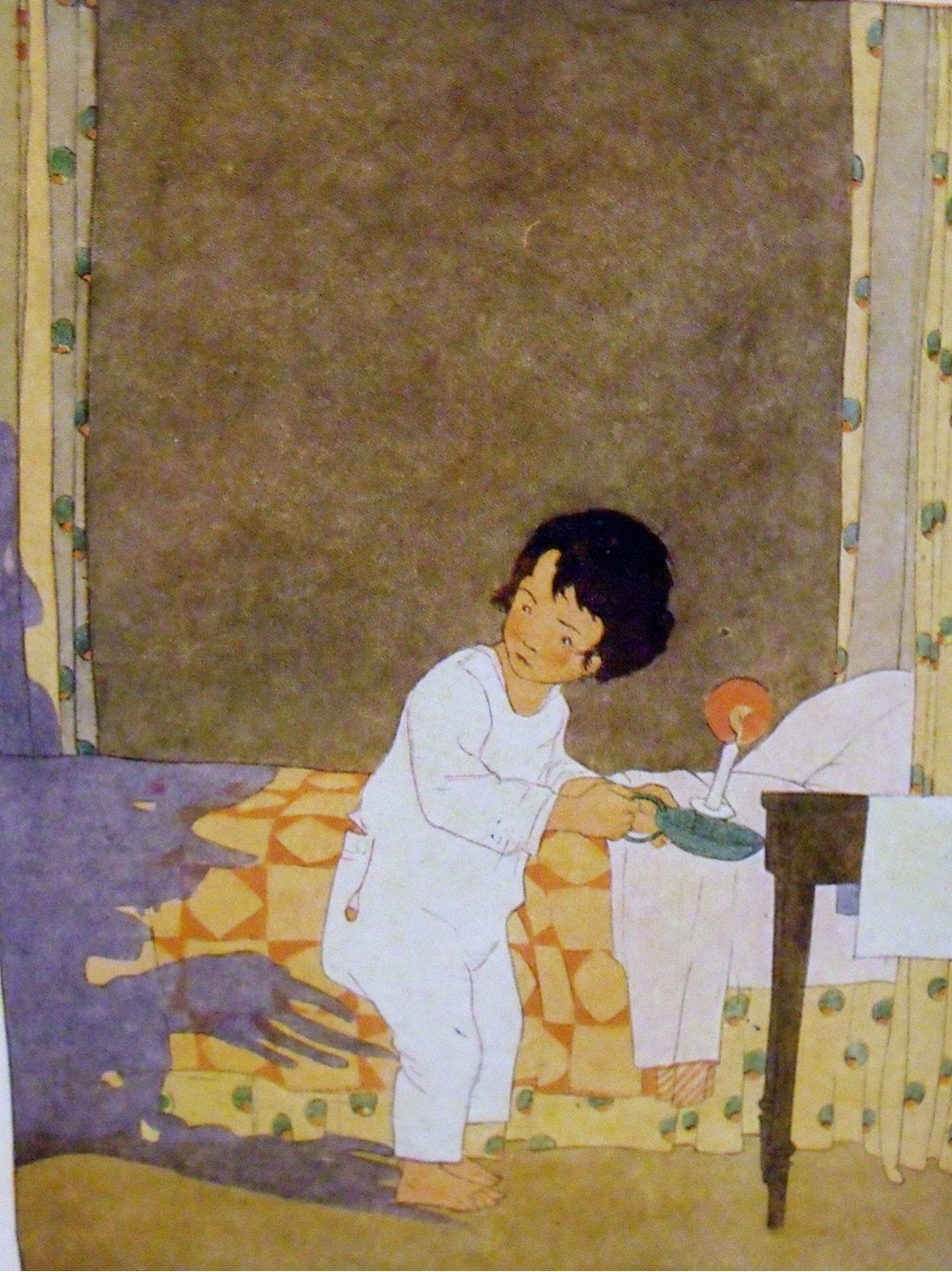

From When Little Thoughts Go Rhyming, c. 1916


There's a lot of mathematical precision in the way she divided and composed each illustration -- and I think it created an order and serenity in her work.  I've never read any scholarship regarding how much other artists working at the same time influenced her work, nor do I know anyone has taken the time to look into it.  However, it would make sense that she was looking at a lot of contemporary, cutting-edge artwork --  it wasn't like the Wright family were cultural slouches.  And my primary reason for speculating about her influences are the incredibly intense illustrations for Honey Bear, c. 1923.
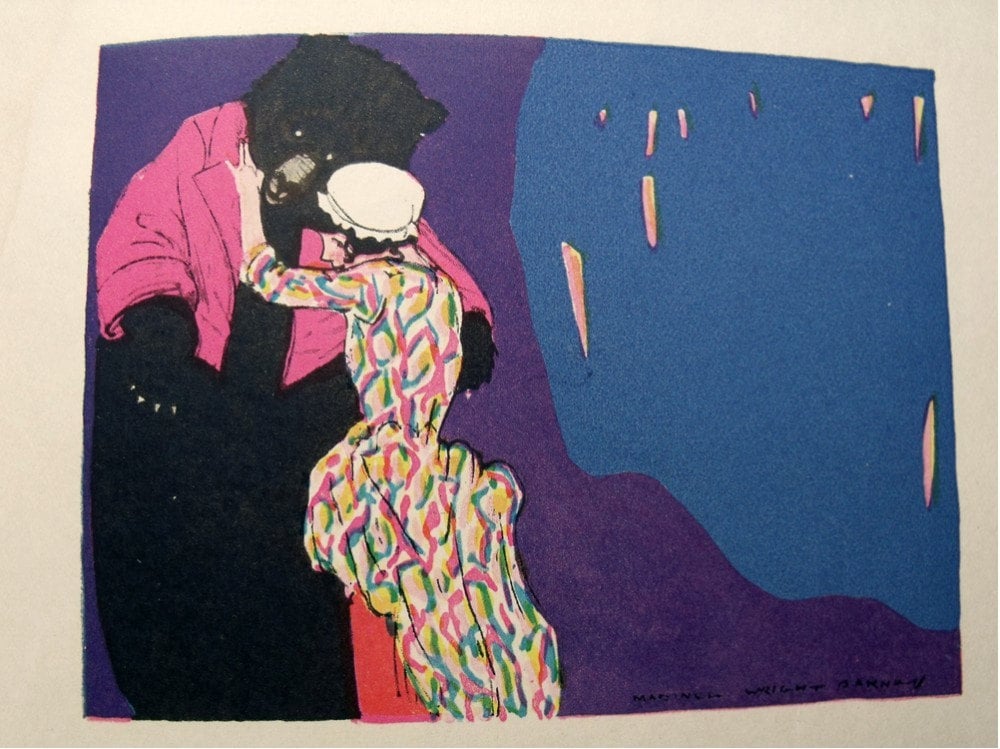


The author Tom Wolfe, who says that Honey Bear made him want to be a writer before he could read, called Maginel an artist is the "japanais vienna secessionist" style, which in Tom Wolfe-ese, means Japanese influenced art nouveau.  And most of the time, that was true.  But to my eyes, her work in Honey Bear looks like Matisse in his Fauvism period:


And since Fauvism came from the term les Fauves, which means "the wild beasts" and Honey Bear was about a wild beast in a forest, I think doing Fauvist illustrations was absolutely perfect.  Maybe that wasn't what Maginel was up to, but it's my theory and I'm sticking with it.   


Friday, November 19, 2010

Dugald Stewart Walker

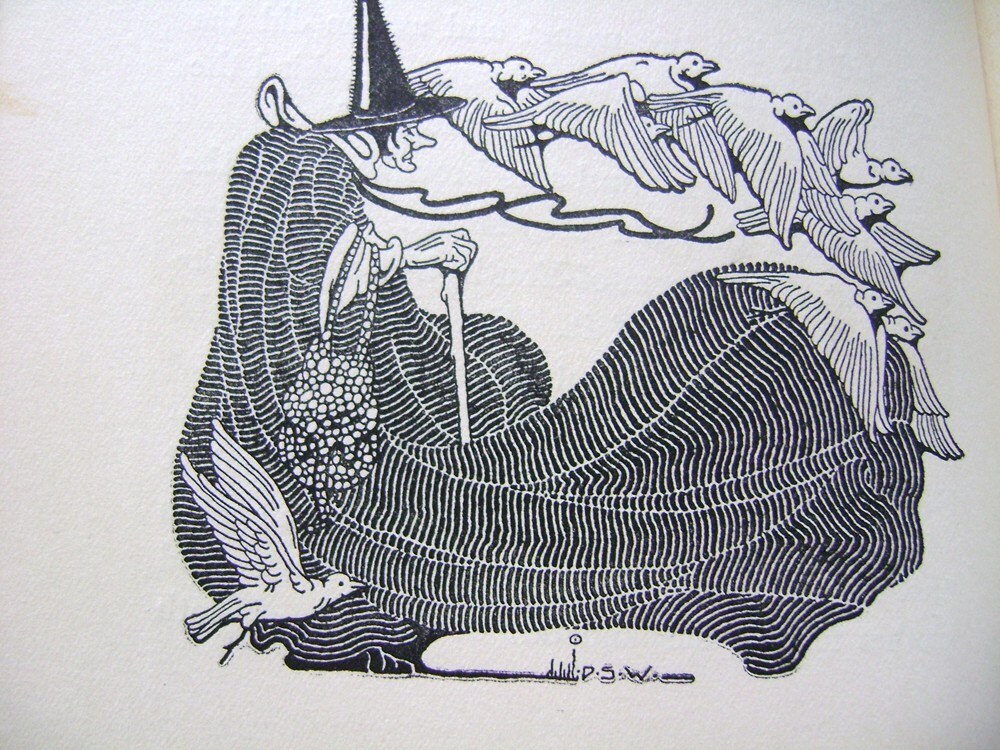
Dugald Stewart Walker (1883-1937) was an art nouveau era illustrator whose work was largely published in children's books.  The man's style was very singular and when left to his own devices, a bit close to obsessive-compulsive.  As artists like to say, he could "make a lot of marks on the page."  Those drawings were fun to look at, albeit a bit overwhelming to the eye.  I mean, holy crap:


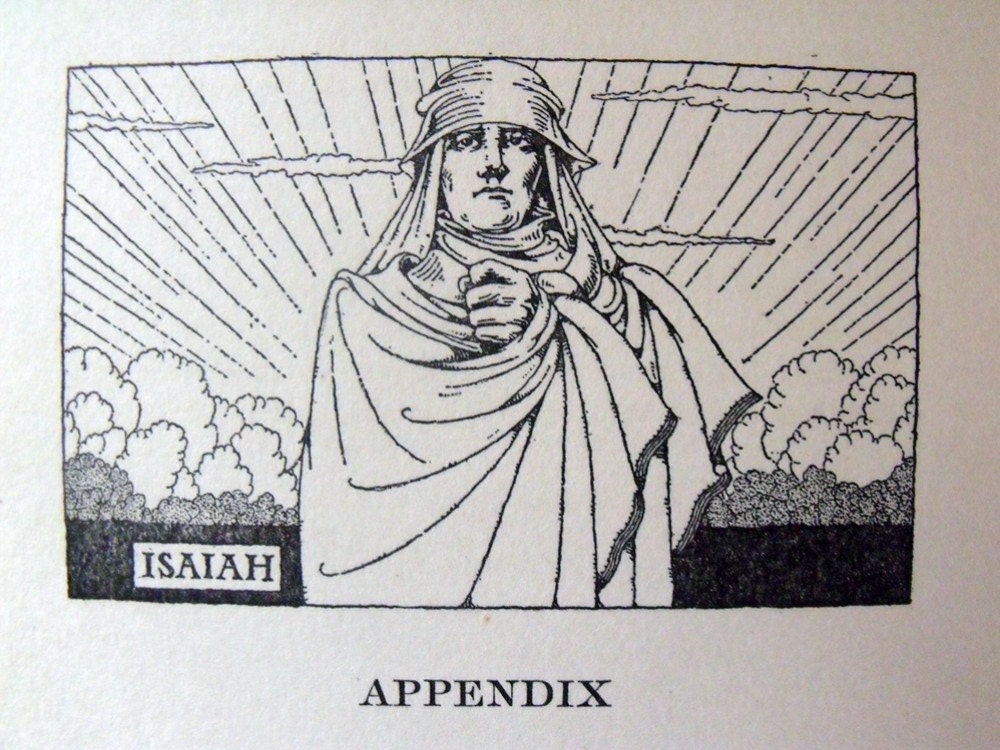
That's a lot to look at.  I had to size it up just so you could look at it adequately and it's still not big enough.  But when someone (like an editor or an author) got him to chill out and not be so ornate, he could also do stunning work.  Such as: 


I think some of his nicest works are for Padraic Colum's books, such as this work for The Boy Who Knew What Birds Said:


Dugie (as I like to call him) was bit of a strange dude.  Here's something he wrote for the introduction to a book that he illustrated:

I have never been anywhere except Richmond, Virginia, and New York, because I have always been told that only grown-up people were allowed to travel. But the good East Wind and the kindly Moon have taken me on rapturous journeys high above the world to get an enchanted view of things. In this book I have put some of my discoveries, but if you are looking here for real likeness of the things that any one could see if he were grown up, you had better close the covers now. You cannot expect me to draw an exact picture of the North Pole or of a Chinese lady's feet or of a sea-cucumber. But if you are interested in what the East Wind or the Father Stork or the Moon told me, then look with my eyes and you will not mind very much if the courtiers in the ogre's court, or the dock leaves in the Garden of Paradise, are not just as a grown-up person thinks they should be. After all is said and done, what the young ones say about it is the all-important matter.

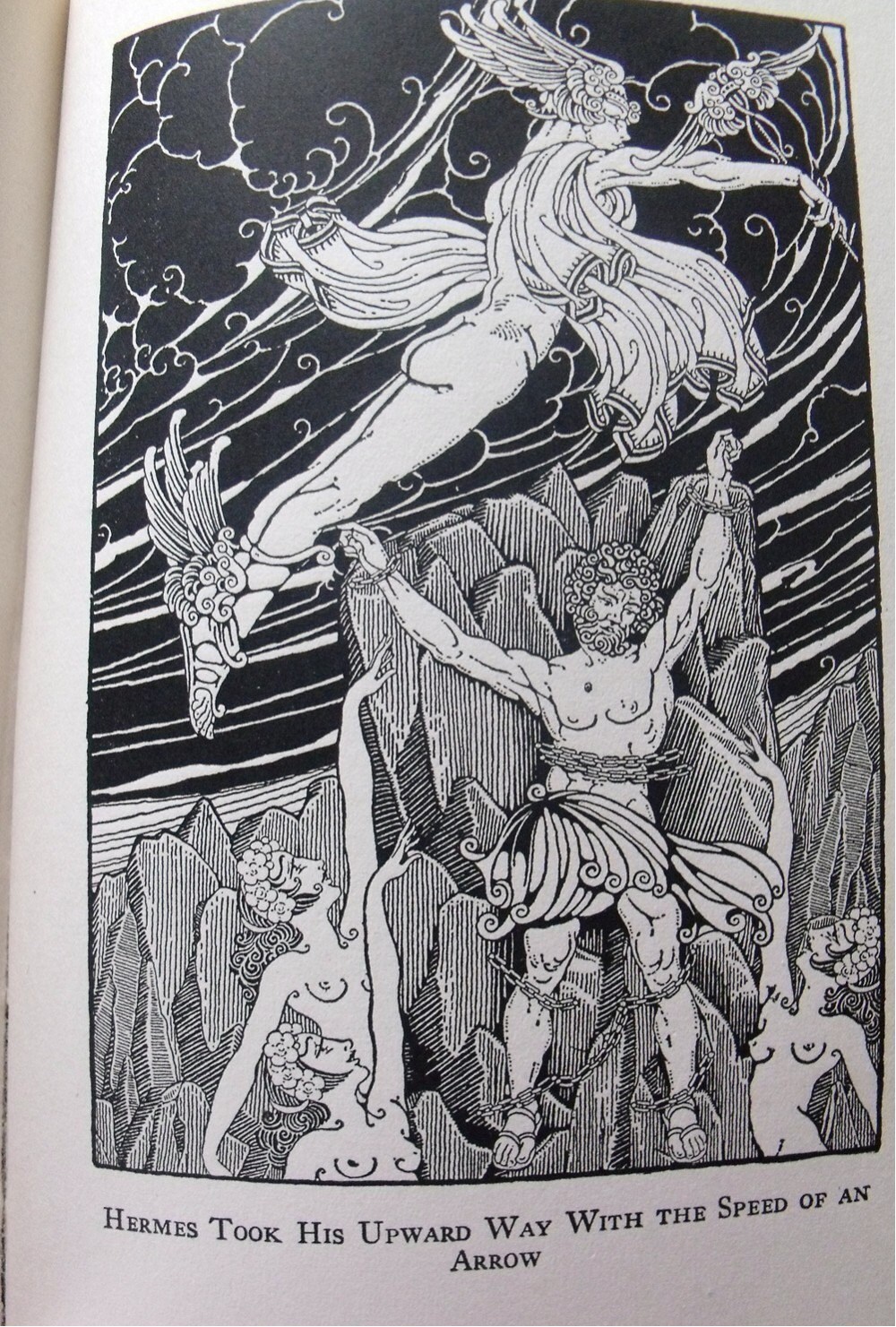
He must have been a rather eccentric Southern gentleman.  And it's probably not cool to speculate about the sexual orientation of the dead, but people do it about Abe Lincoln all the time, so I guess I'll say something about Dugald Stewart Walker.  And I was rather amazed to see that a vintage illustration expert had the same notion as I do:   a lot of his illustrations seem to say "gay" to me.  He liked to work naked male butts into the act whenever he could:


I would venture that Hermes should go to the gym and do some lunges and squats to lift his butt.


To say I'm gay-friendly is an understatement, so this observation is hardly pejorative.  In fact, I'm sure the life of a gay gentleman in Virginia in the early 20th century was less than easy to live, and it leads me to understand how the flights of fancy that he described above may have come about.  When the only choice was to be in the closet and you're a creative, imaginative soul, you might stay at home and imagine what the East Wind is saying to you.  It's quite poignant when you consider it in that manner.  But who knows if that is true -- it's some of my historical fiction.

In the next day or two I'll put up some photos of my prized Dugald Stewart Walker possessions that are very special to me and talk about him a bit more.